
Visual tools for thinking, learning and wellbeing
Visual tools for SEND, learning, wellbeing and self-understanding
InclusiveEd helps children, young people and adults make difficult thoughts, needs and next steps easier to see, organise and communicate through practical visual resources and interactive tools.
When it’s hard to explain what’s going on, make it visible.
Making thinking visible
When words are hard to find
InclusiveEd is especially useful when someone needs a calmer, more visual way to understand an experience, communicate what they need or work out what might help next.
Find a helpful starting point
Visual support for different needs and settings
Explore practical resources for pupil voice, learning, wellbeing, self-understanding and conversations about support.
A visual way to explore
Where visual thinking can help
Start with one area and use smaller visual prompts to build a clearer picture without relying on one big question.
Big Emotions & Anxiety
Strong feelings can affect our bodies, thoughts, behaviour and ability to explain what is happening. Understanding the pattern can make difficult moments feel less frightening and less confusing.
School Avoidance & EBSA
When attending school begins to feel unsafe or unmanageable, behaviour is often communicating something important. Support starts with curiosity rather than pressure.
Building Self-Esteem & Confidence
Confidence usually grows through experience, reflection and small brave steps. It does not need to begin with feeling fearless.
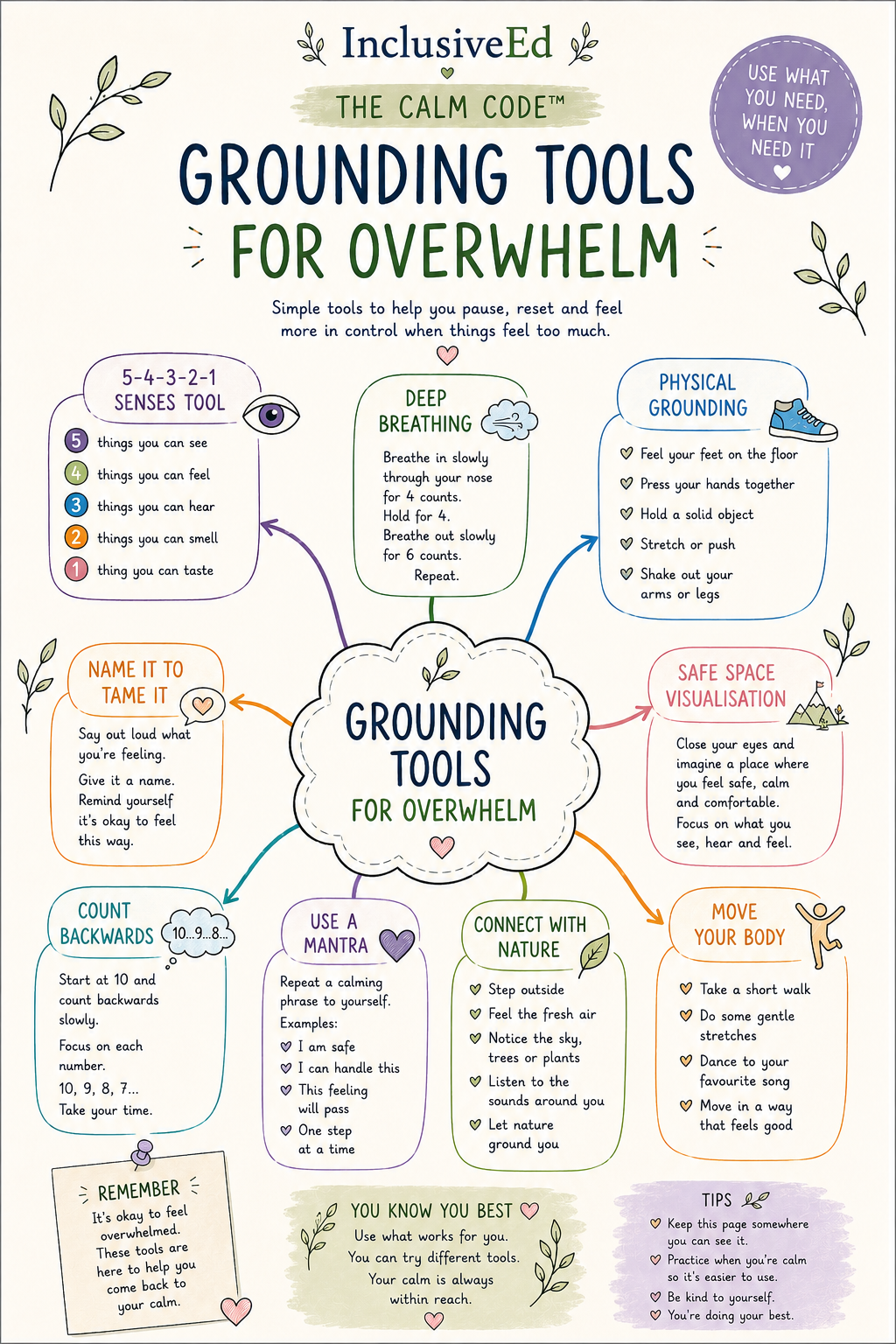
Grounding Tools & Finding Calm
Calm is not something we can always demand from ourselves. It can be supported through safety, movement, breathing, sensory tools and gentle routines.
Understanding Our Brains
Learning what the brain and nervous system are trying to do can replace shame with understanding. Our reactions often make more sense when we know what is happening beneath them.
Making Plans & Moving Forward
Planning can help when life feels uncertain, but plans need room to change. Small, visible steps often feel more manageable than one distant goal.
You do not have to know the whole path. You can simply choose one gentle place to begin.
Support that meets people where they are
Resources for different people
The InclusiveEd approach
What makes InclusiveEd different
Many people find broad questions difficult to answer. InclusiveEd breaks bigger questions into smaller visual prompts and places the person at the centre.
This person-centred visual approach helps someone gradually build a clearer picture in their own way and at a manageable pace.
- Strengths
- Barriers
- Learning needs
- Sensory needs
- Feelings and triggers
- Helpful strategies
- Trusted people
- Goals and next steps
For education and professional settings
Visual tools for schools and practitioners
InclusiveEd resources can support calm, structured conversations around pupil voice, SEND, pastoral support, learning barriers, sensory needs, anxiety, emotional regulation, confidence and practical support.
Visual tools can contribute to pupil participation within processes such as Assess–Plan–Do–Review; they do not replace those processes or professional judgement.
Interactive visual resources
Interactive tools for reflection and pupil voice
Interactive visual tools help pupils explore what is difficult, what helps, what matters to them and what they would like to change.
My Support Map helps children and young people explore what feels difficult, what helps, who supports them and what they may need. My Project uses smaller visual prompts to explore identity, strengths, feelings, relationships, goals and future thinking.
These tools are designed to make reflection and communication more accessible when broad questions or long worksheets create too much cognitive load.
Explore the InclusiveEd library
Featured collections
Three visual resources selected to help make feelings, progress and next steps easier to understand.
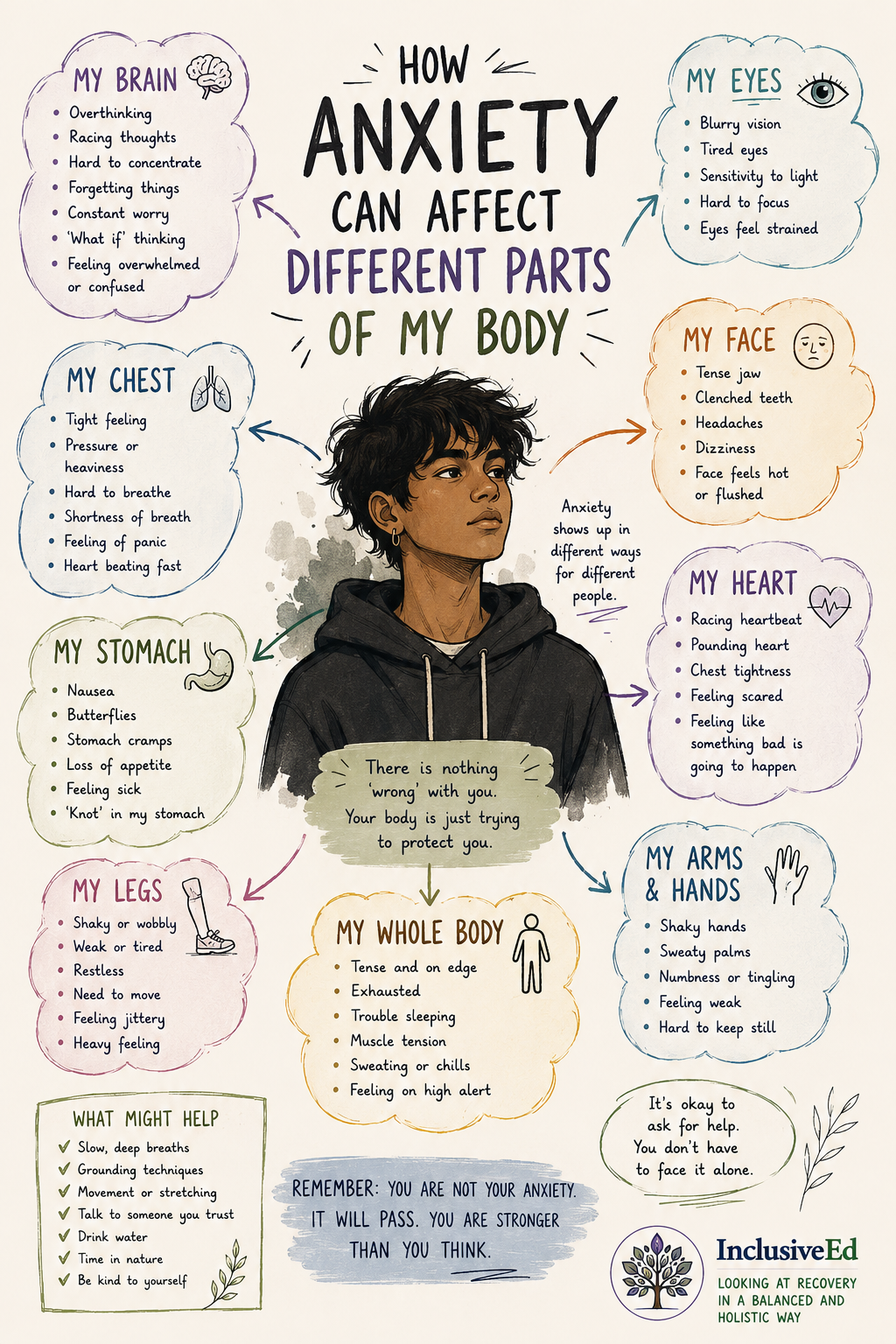
Teen Wellbeing Visual Guides
Calm visual explanations for thoughts, feelings, safety and confidence.
Explore resources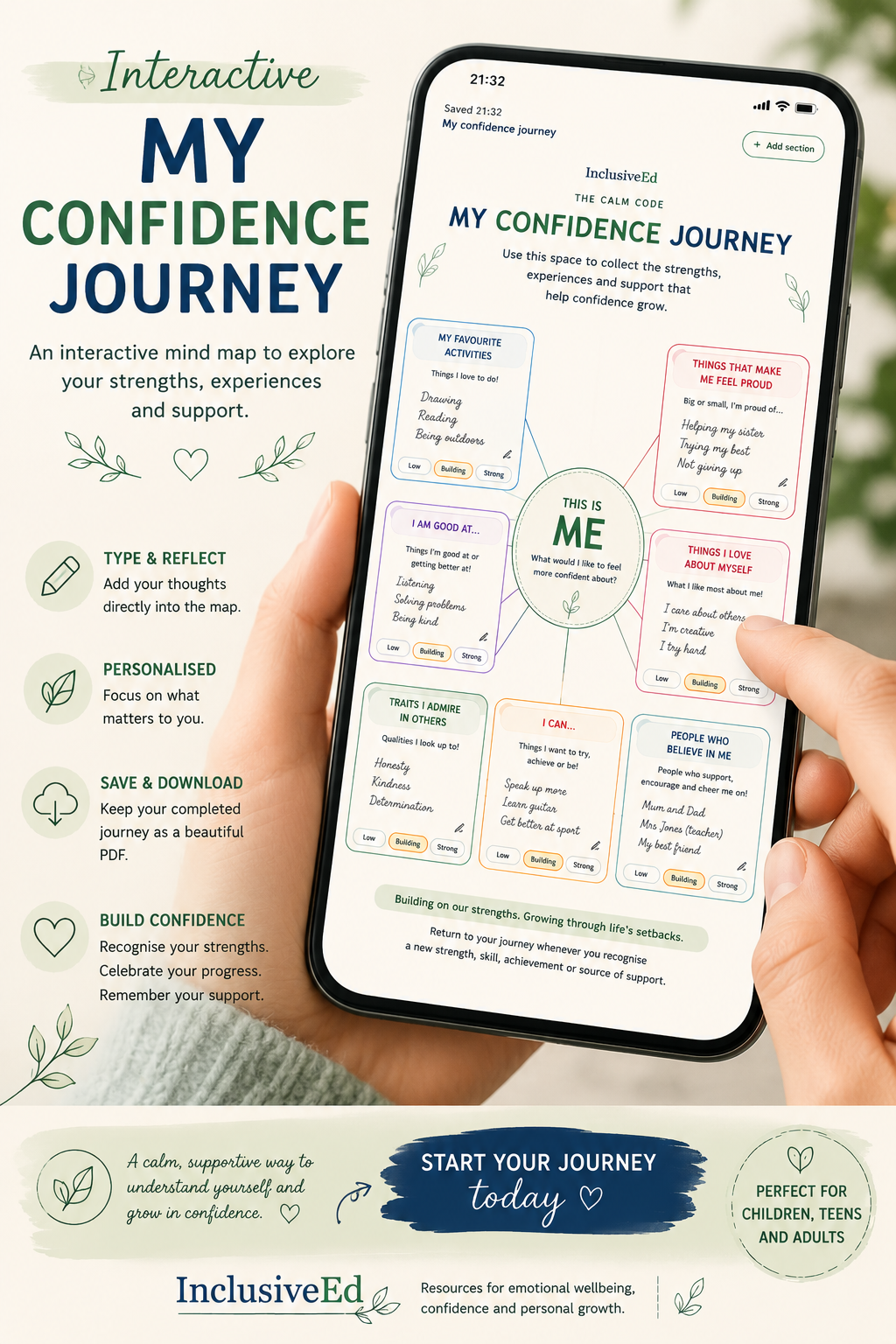
Understanding ourselves. Understanding others.